
-
×
 Mastering Clickbank Through Google Strategies
2 × $4.95
Mastering Clickbank Through Google Strategies
2 × $4.95 -
×
 Affiliate Marketing Kickstart
1 × $4.95
Affiliate Marketing Kickstart
1 × $4.95 -
×
 Affiliate Marketing Success Tips
1 × $4.95
Affiliate Marketing Success Tips
1 × $4.95 -
×
 Running Niche Affiliate Marketing Package
1 × $4.95
Running Niche Affiliate Marketing Package
1 × $4.95 -
×
 Operation Affiliate Cash
1 × $4.95
Operation Affiliate Cash
1 × $4.95 -
×
 Email Marketing Maestro
1 × $4.95
Email Marketing Maestro
1 × $4.95 -
×
 Payment Processor Secrets
1 × $4.95
Payment Processor Secrets
1 × $4.95 -
×
 Outsource Your Business
1 × $4.95
Outsource Your Business
1 × $4.95 -
×
 Affiliate Marketing 3.0 Unlocked
1 × $4.95
Affiliate Marketing 3.0 Unlocked
1 × $4.95 -
×
 Create Your Own Job
1 × $4.95
Create Your Own Job
1 × $4.95
Technology
Top 10: The Most Technologically Innovative Cars of the Last 100 Years
This tutorial explores ten cars that weren't just fast or beautiful, but were revolutionary. Each one introduced a technological innovation that fundamentally changed automotive design and engineering forever.
1. The Affordable V8 Era: Ford Model 18 (V-8)
Vehicle Type: Sedan / Coupe
Year: 1932

The Innovation: The Monobloc Flathead V8 Engine Before 1932, powerful 8-cylinder engines were reserved for the ultra-wealthy. Ford’s genius was in developing a method to cast the entire V8 engine block as a single, affordable piece (a “monobloc”).
The Impact: This car didn't just give the public transportation; it gave them power. The affordable V8 democratized performance, single-handedly kicking off American hot-rod culture.

2. The Small Car Blueprint: BMC Mini
Vehicle Type: Compact City Car
Year: 1959

The Innovation: Transverse Engine & Front-Wheel Drive To create maximum interior space in a tiny car, designer Alec Issigonis turned the engine sideways (transverse) and paired it with front-wheel drive.
The Impact: The Mini’s layout was a revelation. This brilliant packaging solution became the universal blueprint for nearly every small car that followed.
3. The Birth of the Supercar: Lamborghini Miura
Vehicle Type: Supercar
Year: 1966

The Innovation: Mid-Engine Layout in a Road Car The Miura was the first production car to mount a powerful V12 engine directly behind the driver.
The Impact: The Miura created the template for the modern supercar. Its stunning design, dictated by its engine placement, set the standard for every high-performance car that followed.
4. Safety Becomes Standard: Mercedes-Benz S-Class (W116)
Vehicle Type: Luxury Sedan
Year: 1978

The Innovation: The First Production Anti-Lock Braking System (ABS) The electronic ABS used sensors to “pump” the brakes far faster than a human could, allowing the driver to steer while braking heavily.
The Impact: ABS was arguably the most significant automotive safety feature since the seatbelt. What started as a luxury option is now legally required on all new cars.
5. All-Weather Dominance: Audi Quattro
Vehicle Type: Rally / Sports Coupe
Year: 1980

The Innovation: Permanent All-Wheel Drive (AWD) in a Performance Car Audi developed a sophisticated yet lightweight permanent AWD system and put it in a high-performance coupe.
The Impact: The Quattro completely dominated the World Rally Championship, proving that AWD provided superior grip on all surfaces. It made AWD a desirable performance and safety feature.
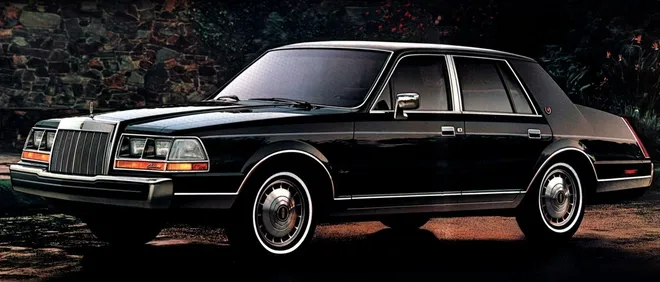
6. The Digital Brain: Lincoln Continental Mark VII
Vehicle Type: Personal Luxury Coupe
Year: 1986

The Innovation: First American car with a driver's side airbag and standard 4-channel ABS. This car was a technological showcase that brought key electronic safety features to a wider American audience.
The Impact: The Mark VII signaled a major shift towards prioritizing electronic safety, helping normalize airbags and advanced braking systems in the US market.
7. The Hybrid Revolution: Toyota Prius
Vehicle Type: Hybrid Compact
Year: 1997 (Japan) / 2000 (Worldwide)

The Innovation: The Modern Hybrid Powertrain The Prius seamlessly combined a small gasoline engine with an electric motor and a battery pack, and recharged its own battery through braking.
The Impact: The Prius made hybrid technology mainstream and forced every other major automaker to develop their own hybrid systems.
8. The Electric Game-Changer: Tesla Model S
Vehicle Type: Electric Luxury Sedan
Year: 2012

The Innovation: A Long-Range, High-Performance Electric Vehicle (EV) The Model S proved that EVs could be desirable, high-performance cars with over 250 miles of range, paired with its own dedicated “Supercharger” network.
The Impact: It forced the entire legacy auto industry to accelerate their EV plans and redefined what a car's interior and user experience could be.

9. Advanced Materials for the People: BMW i3
Vehicle Type: Electric City Car
Year: 2013

The Innovation: Mass-Produced Carbon Fiber Reinforced Plastic (CFRP) Chassis BMW invested billions to create a process to mass-produce the i3’s entire passenger cell out of CFRP, a material usually reserved for superautomobila.
The Impact: The i3 was a bold experiment in bringing exotic material science to the masses, influencing how lightweight materials can be integrated into common vehicles.
10. The AI Co-Pilot: Mercedes-Benz S-Class (W222)
Vehicle Type: Luxury Sedan
Year: 2013

The Innovation: The First Comprehensive Advanced Driver-Assistance System (ADAS) This S-Class integrated a suite of cameras, radar, and sensors to create a “cocoon” of safety that could steer, brake, and accelerate for the driver in certain conditions.

The Impact: This car marked the true beginning of the semi-autonomous era, shifting the concept of safety from being purely passive to being active and predictive.